
One Saturday evening, your child is coughing heavily and their regular doctor won’t see them until Monday. You’re torn between going to the hospital emergency room and waiting it out. The 116 117 exists precisely for this situation: to connect residents of Normandy with an on-call general practitioner, without going through 15 or overcrowding the emergency services.
This free number works in conjunction with the SAMU, but its role remains poorly understood. Many Normans are still unaware of when to call it, what happens once the call is answered, and especially what it cannot do.
What 116 117 does not do: the boundary with 15
Before detailing how 116 117 works, a clear boundary must be established. 116 117 does not handle life-threatening emergencies. Chest pain, loss of consciousness, severe breathing difficulties, heavy bleeding: these situations fall under 15 (SAMU), which triggers an emergency response.
116 117 operates in a different realm: non-scheduled care. Your child has had a fever for several hours, you feel an unusual but stable pain, or you need a prescription refill outside of office hours. These are typical cases.
The confusion between these two numbers leads to misdirected calls in both directions. Patients in serious situations call 116 117 and waste time. Others overload 15 with requests that do not warrant emergency regulation. Understanding the 116 117 service in Normandy allows you to use the right channel from the first call.
Calling 116 117 in Normandy: what happens concretely
You dial the number. The call is free, accessible anywhere in Normandy, whether you are in Rouen, Caen, Alençon, or in a rural town in the Cotentin. The service operates when general practice offices are closed: evenings, nights, weekends, and holidays.
Medical triage by phone
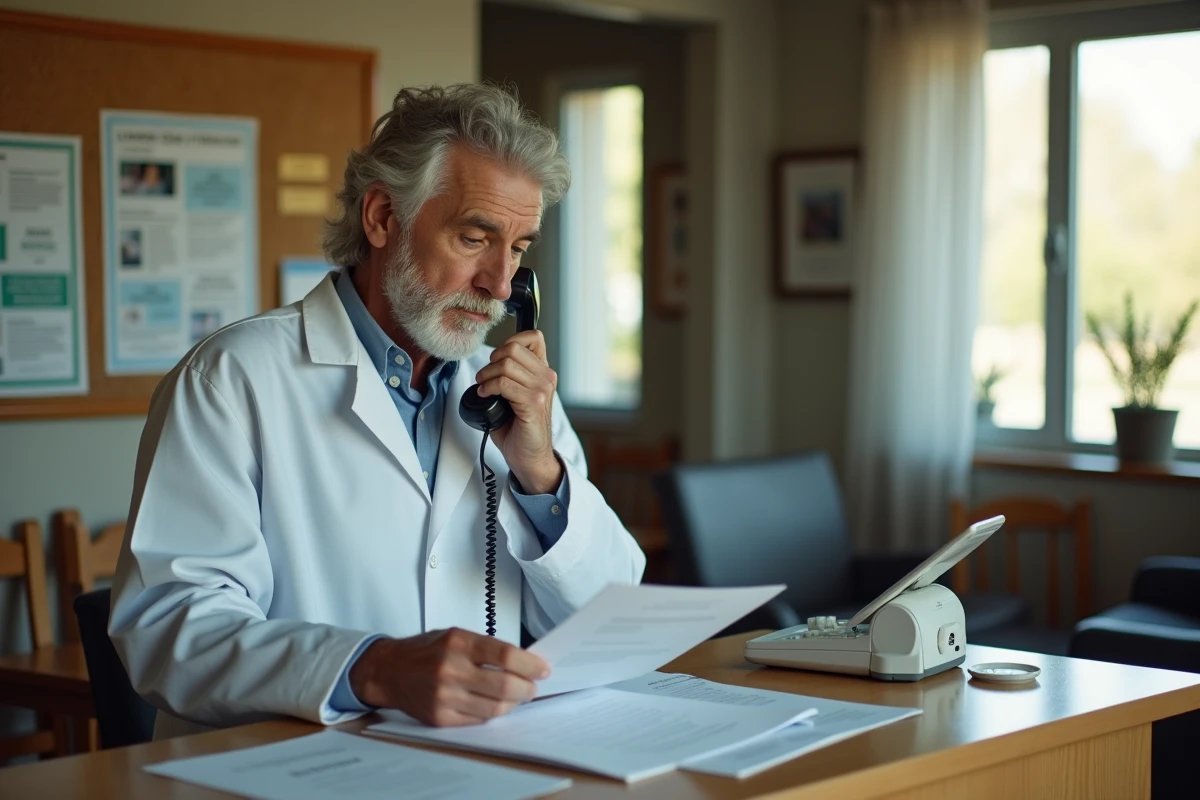
A healthcare professional or a regulation assistant takes your call. They ask questions about your symptoms, their duration, and their intensity. This triage is not administrative: it serves to determine the appropriate response to your situation.
Calling 116 117 does not guarantee an immediate appointment. Depending on your case and the availability of on-call doctors in your area, several options are possible:
- Medical advice by phone, sufficient to manage the situation until your usual office reopens
- Referral to an on-call general practitioner or a nearby medical house
- Redirection to 15 if the triage reveals a situation more serious than what you initially described
This phone triage constitutes the real value of the service. It avoids unnecessary trips to the emergency room when a simple piece of advice is sufficient, and it detects situations that require rapid care.
A response that depends on the territory
Normandy encompasses five departments with very different realities in terms of medical density. In urban areas like Rouen or Le Havre, medical houses are more accessible. In rural areas, the availability of on-call doctors varies by evening and sector.
116 117 adapts to this reality. The response provided depends on local resources at the time of your call. On a busy evening in Orne, phone advice will be prioritized. On a Sunday morning in Caen, a consultation at a medical house will be more easily offered.
116 117 and your general practitioner: two complementary links
You may have noticed that your general practitioner rarely mentions 116 117 during consultations. However, the link between the two is direct.
116 117 takes over when your doctor is unavailable. It is part of the organization of out-of-hours care (PDSA), the system that ensures continuity of care in city medicine outside of regular hours.
The private general practitioners who participate in on-call duties are the ones to whom 116 117 directs you. They are not hospital emergency doctors, but city practitioners who provide on-call slots according to a schedule organized at the departmental level.
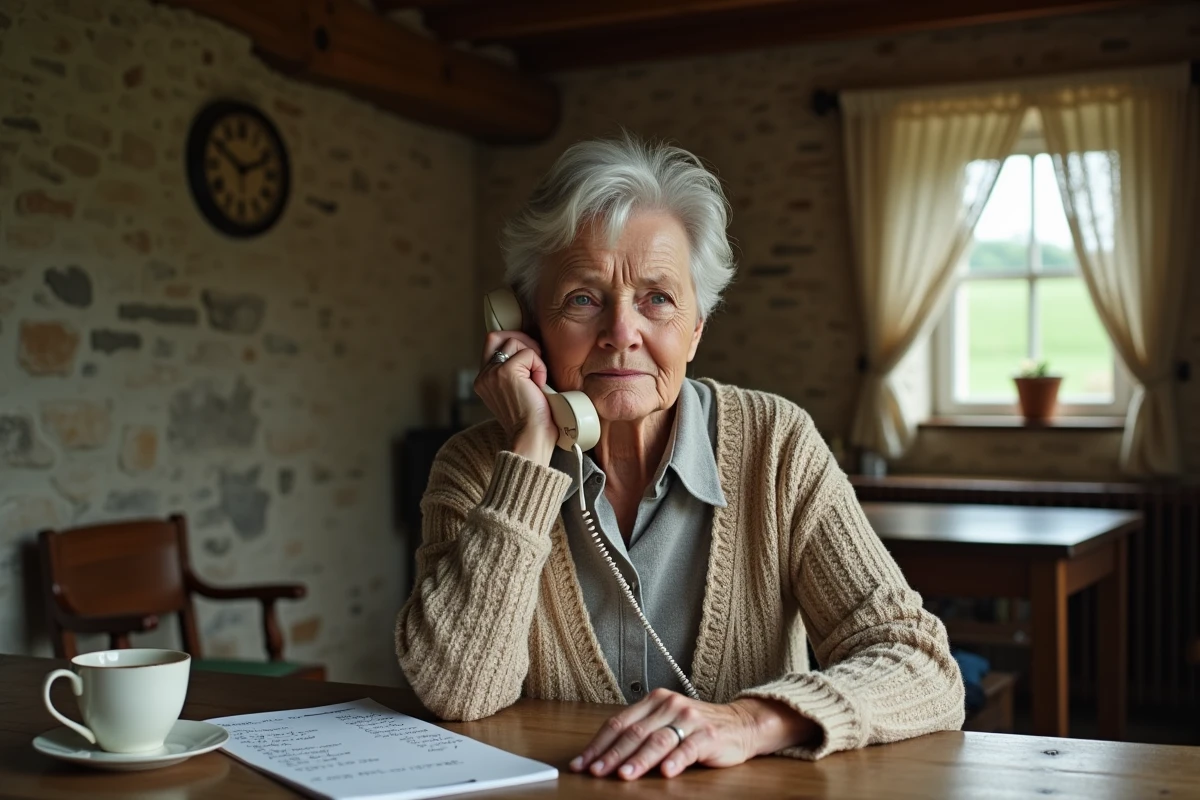
This distinction has a practical consequence: the consultation obtained via 116 117 resembles a classic general medicine consultation. The on-call doctor can prescribe, renew a treatment, and examine a patient. They do not have the technical facilities of an emergency service.
When to call 116 117 instead of waiting until Monday
The temptation to “hold out until Monday” is common, especially among patients who hesitate to disturb. However, certain situations justify a quick call to 116 117:
- Persistent fever in a young child, even without apparent serious signs
- Acute pain that prevents sleep or normal activities
- Unusual symptoms that appeared suddenly (dizziness, rash, repeated vomiting)
- Need for medical advice to adjust an ongoing treatment whose effects seem abnormal
116 117 also serves to reassure. A call of a few minutes often helps to determine whether the situation can wait or if an on-call consultation is preferable. This triage function reduces anxiety as well as unnecessary visits to the emergency room.
Conversely, if your symptoms are stable and you can consult your general practitioner in the following hours, 116 117 is not necessarily the right reflex. The number is aimed at requests for non-scheduled care outside of office hours, not as a replacement for a standard appointment.
Normandy is one of the regions where this number operates across the entire regional territory with uniform coverage. Remembering two reflexes is enough: 15 for any life-threatening emergency, 116 117 for everything else when your doctor is unreachable. This simple distribution frees up hospital emergency services and ensures a medical response tailored to each situation.