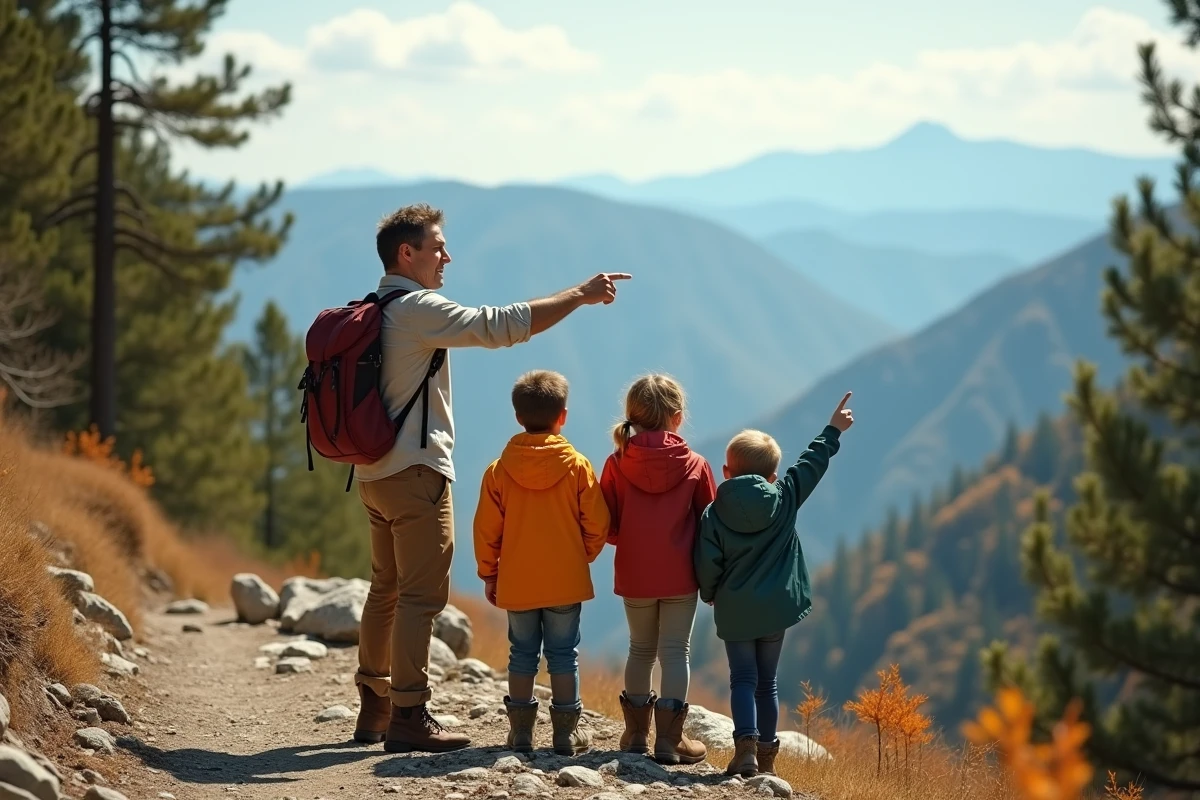
Traveling with family and children involves making choices between opposing factors: budget, travel time, daily rhythm, type of accommodation. Rather than listing destinations, this article compares family travel formats to identify those that deliver on their promises in practice.
Family Travel: Comparison of Formats by Children’s Age
The choice of format determines the pace, budget, and level of parental fatigue. Not all formats are equal depending on the age group.
| Travel Format | Suitable Age | Daily Rhythm | Luggage Logistics | On-Site Flexibility |
|---|---|---|---|---|
| Road trip by van or car | From 2 years | Flexible, free breaks | High (everything included) | Very high |
| Donkey trekking | From 3-4 years | Slow, suitable for little legs | Low (the donkey carries) | Medium (fixed itinerary) |
| Fixed stay rental/gîte | All ages | Free | Low once settled | High locally |
| Organized family tour | From 6 years | Intensive | Managed by the operator | Low |
| Bivouac / micro-adventure | From 4-5 years | Short (1-2 nights) | High (total autonomy) | Total |
The road trip and fixed stay dominate in flexibility. Donkey trekking reduces the physical load on parents while imposing a pace that young children can easily follow. Organized tours, on the other hand, set the group on a schedule that rarely suits those under six.
Resources like Babar Autour du Monde allow families to share feedback on these different formats in practice, helping to calibrate expectations before booking.
Hiking and Biking with Family: What the Terrain Really Changes
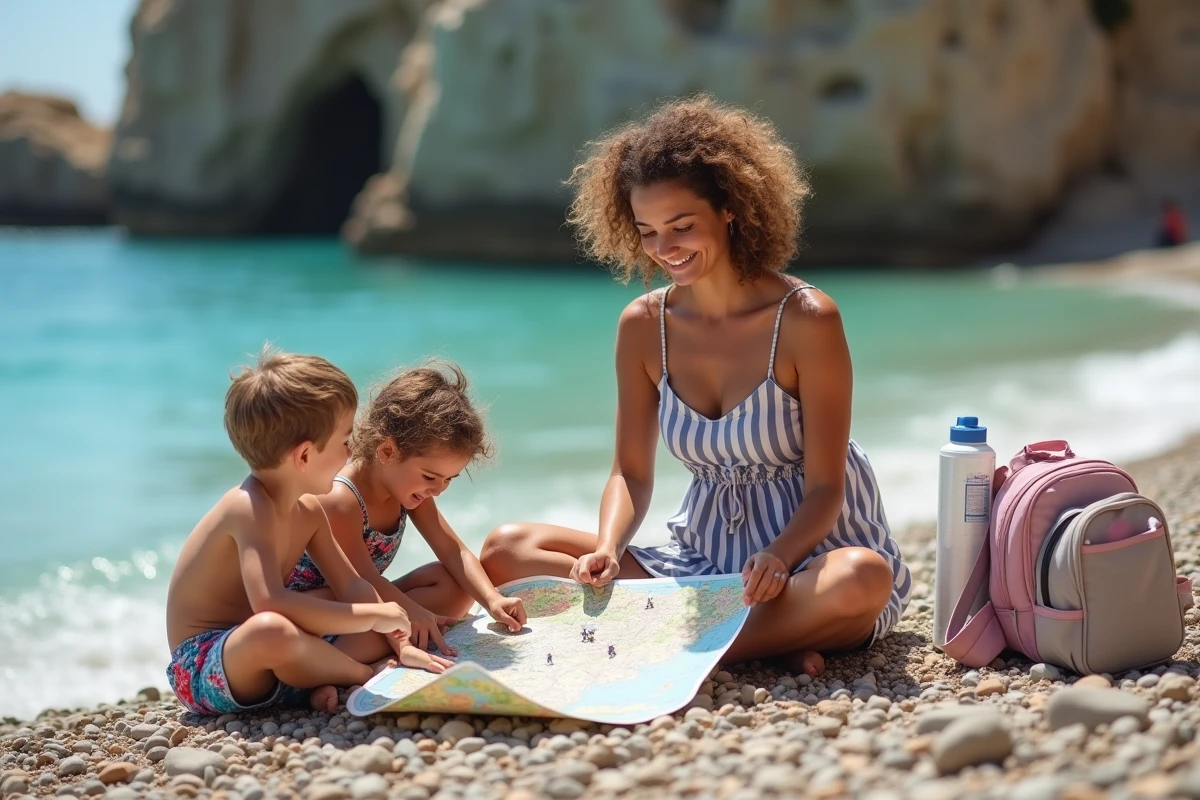
Hiking remains the most accessible format for family travel. The difficulty does not lie in the elevation but in managing the pace. A four-year-old walks significantly slower than an adult on average, and their attention span drops after an hour on a monotonous trail.
Hiking with Children: Key Variables
- Variety of the route: alternate between forest, river, viewpoint. A trail without changes in scenery bores a child in less than an hour.
- Appropriate carrying: backpack carrier for those under three, light backpack from age five to encourage responsibility without overloading.
- Active breaks: identify water points, climbable rocks, an intermediate shelter on the map. The break becomes the goal, not the obstacle.
Family biking changes the equation. A child trailer or follow-me bike allows for longer distances without exhausting the little ones. Greenways and bike paths provide a safe environment where motor traffic is absent or limited.
Bivouacking with Family: What Parents Underestimate
Sleeping in a tent with children seems simple on paper. The reality requires specific preparation. An insulating mattress is more important than a sleeping bag: a child loses body heat through the ground faster than an adult. The choice of location (flat, sheltered from the wind, close to a water point) determines the quality of sleep for the whole family.
Testing bivouacking in your garden before leaving avoids unpleasant surprises. The child gets used to the noise, darkness, and the outdoor bedtime ritual.
Family Vacation Budget: Where the Money Really Goes
Accommodation and transportation make up the largest part of a family travel budget. The destination itself weighs less than the chosen format.
A road trip in France with camping nights costs significantly less than an organized tour abroad, even for an equivalent duration. The difference is greater in three areas: air travel (multiplied by the number of passengers), organized activities (often charged per person, including children), and dining.
Renting equipment instead of buying reduces the gear bill for families starting out with bivouacking or bike touring. Several retailers offer rentals of bike trailers, hiking baby carriers, and family tents.
Nearby Destinations for a First Adventure Trip with Children
France offers a variety of terrains that make distant travel optional for a first family adventure. The Jura, the Ardennes, the Massif Central, and the Chartreuse are frequently mentioned in stories from adventurous families.
- The Jura combines hiking, accessible lakes, and cheese (a decisive argument with children).
- The Ardennes offer dense forests and moderate relief, suitable for toddlers.
- The Massif Central features volcanic landscapes that captivate children fascinated by geology.
- The Chartreuse lends itself to short hikes with alpine panoramas without the demanding altitude of Mont Blanc.
In contrast, distant destinations labeled “kid-friendly” (Morocco, Sicily, Cape Verde) require a flight, a potential time zone change, and health logistics that families with children under five often prefer to postpone.
The most reliable criterion for choosing a family destination is neither the climate nor the change of scenery. It is the travel time compared to the total duration of the stay. Spending an entire day in transit for a four-day stay diminishes the experience for the whole family, regardless of the scenery upon arrival.
The format that works best for a first adventure trip is one that allows for flexibility: no rigid bookings, short stages, and the possibility to shorten or extend according to the group’s mood. It is this flexible framework that transforms a family trip into a true shared memory.