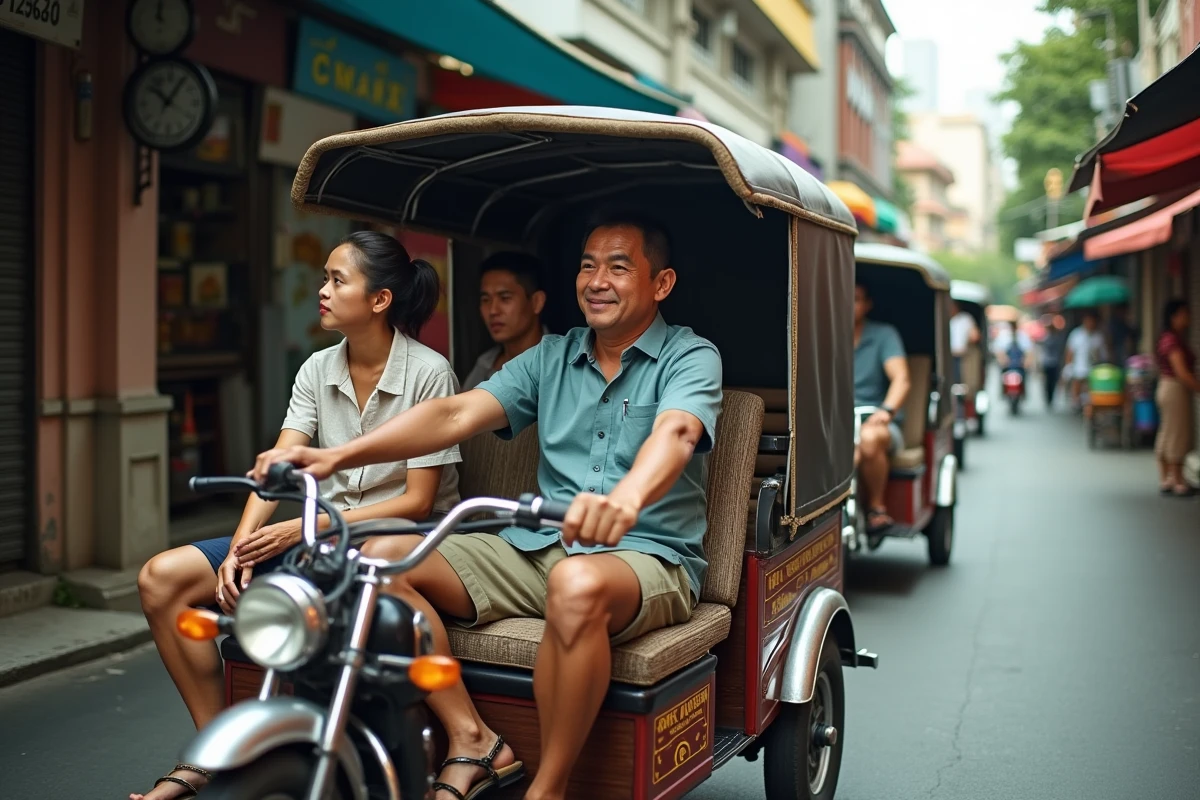
The capacity of a tuk-tuk varies much more than one might imagine. Between a traditional three-seat autorickshaw and a modular electric shuttle that can accommodate eight passengers, the differences are considerable. What determines the number of people transported is not limited to the size of the vehicle: local regulations, the type of certification, and the interior layout play a crucial role. Comparing these configurations helps to understand what each model actually allows.
Tuk-tuk Capacity by Model Type: Comparative Table
Manufacturers today offer identical chassis available in several versions. The number of seats directly depends on the interior layout chosen at the time of ordering, not on the overall size of the vehicle.
| Type of Tuk-tuk | Passenger Capacity (excluding driver) | Seat Arrangement | Main Use |
|---|---|---|---|
| Traditional autorickshaw (thermal) | 3 | Single rear bench | Urban taxi (Asia, Africa) |
| Compact electric tuk-tuk | 3 to 4 | Bench or individual seats | Short-distance shuttle, tourism |
| Intermediate electric tuk-tuk | 6 | Longitudinal or face-to-face benches | Tourist taxi, urban shuttle |
| Large-capacity electric tuk-tuk | 8 | Multiple rows, removable seats | Hotel shuttle, collective transport |
The central takeaway: a standard tuk-tuk transports 3 passengers plus the driver. Models with 6 or 8 seats exist, but their certification and permitted use vary by country.
To understand precisely how many people can fit in a tuk-tuk depending on each configuration, one must also consider the regulations of the operating country.

Regulations and Legal Limits: Why the Manufacturer’s Sheet Is Not Enough
A tuk-tuk certified for 8 passengers by the manufacturer cannot always operate with 8 people on board. Local regulations often create a gap between technical capacity and authorized capacity.
Legal Limit in France for Tuk-tuks
In France, the legal limit remains set at 6 passengers for tuk-tuks used in passenger transport. This ceiling applies even if the model physically has additional seats.
Inspections are increasing, especially in tourist areas. Fines for overloading are no longer anecdotal. An operator exceeding this limit risks fines and the suspension of their transport authorization.
Municipal Restrictions in Historic City Centers
Some tourist cities go further than national regulations. Municipal decrees or local charters impose a maximum of 4 adult passengers per vehicle in old town centers and pedestrian zones, even for models designed for 6 people.
The goal: to reduce congestion at narrow intersections and limit maneuvers during passenger boarding and alighting. For an operator, the actual capacity of a tuk-tuk therefore depends as much on the operating address as on the vehicle itself.
Modular Electric Tuk-tuks: Variable Capacity on the Same Chassis
The market for recent electric tuk-tuks has introduced a logic of modularity that changes the way capacity is considered. The same chassis can accommodate several interior layouts, with different certifications for each configuration.
Common options on these modular vehicles include:
- Removable rows of seats allowing a transition from a 4-passenger configuration to 6 or 8 depending on the planned route
- Longitudinal benches that can be replaced by individual seats for “comfort” use with fewer places
- Folding backrests freeing up cargo space in place of two rear seats
This flexibility comes with an administrative cost. Each configuration declared to the regulatory authority requires specific certification. An operator cannot freely switch from 4 to 8 seats by removing seats without having validated the new configuration.
The capacity of a modular tuk-tuk depends on the certified configuration, not the physical number of installed seats. This distinction appears in recent municipal specifications and in manufacturers’ technical sheets.
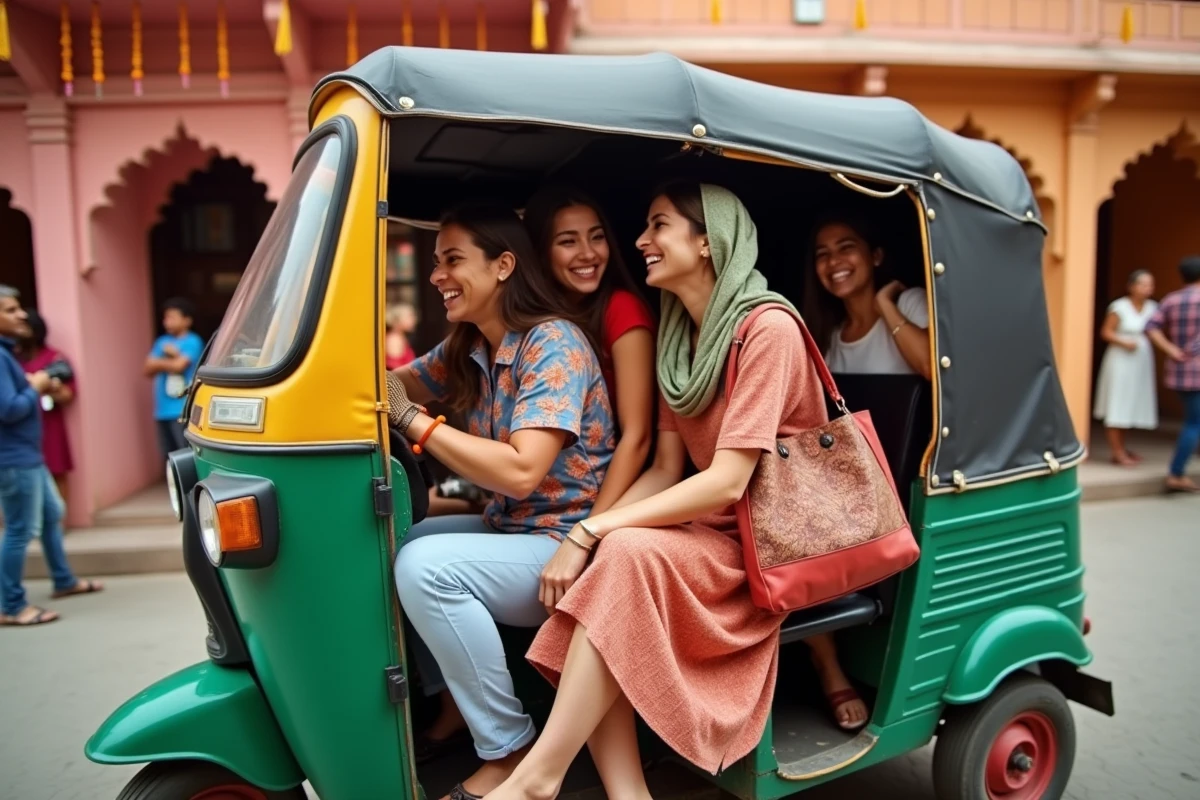
Passenger Comfort and Safety: The Gap Between “Standardized” Seats and Actual Seats
Manufacturers’ catalogs often list two capacity figures for the same model: a “comfort” version and a “densified” version. The difference between the two deserves examination.
In comfort configuration (4 to 5 passengers on an intermediate model), each person has sufficient space for an average-duration trip. In densified configuration (6 to 8 passengers), the space per person decreases significantly. This mode remains acceptable for very short trips, such as a shuttle between a parking lot and a tourist site.
Factors that reduce the effective capacity of a tuk-tuk include:
- The presence of bulky luggage (suitcases, strollers) occupies the space of one or two passengers
- The size of adult passengers, especially on longitudinal benches where shoulder-to-shoulder contact becomes uncomfortable beyond 3 people per row
- Weather conditions: in hot regions, physical proximity makes trips uncomfortable beyond a few minutes
Technical sheets indicate 6 to 8 possible passengers, but 6 “standardized” seats for taxi or shuttle use. This gap between maximum capacity and reasonable capacity explains why most professional operators opt for the intermediate configuration.
On the other hand, hotel shuttles or short-distance transfer services sometimes exploit the maximum capacity, as the trip lasts only a few minutes and comfort takes a back seat.
The question of the capacity of a tuk-tuk is therefore resolved at three levels: what the manufacturer offers (up to 8 seats), what the law allows (often 6, sometimes 4 in restricted areas), and what passenger comfort actually permits on a given trip. An operator who chooses their vehicle without considering these three parameters risks either underutilization or penalties.