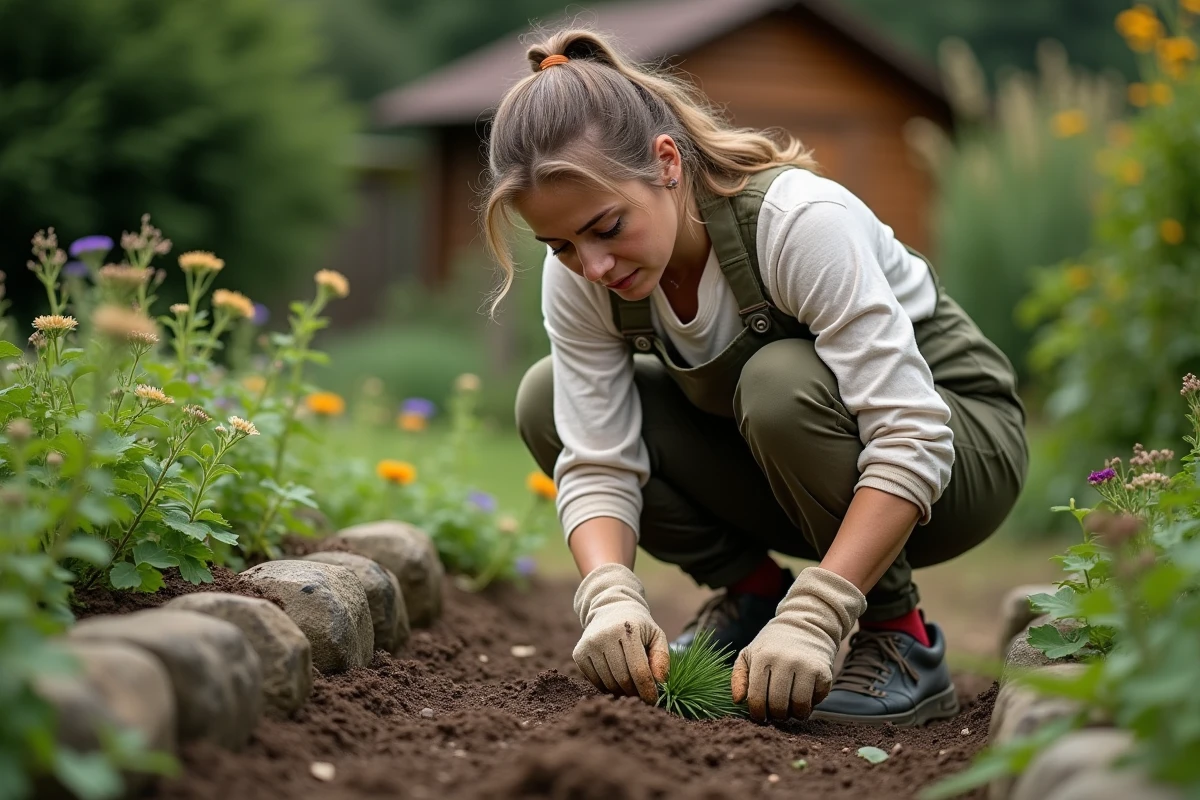
A neatly mowed lawn every week, hedges trimmed to perfection, flower beds weeded to the bone: this garden model requires a lot of energy for a result that is often fragile. As soon as a drought sets in, the soil cracks and the plants suffer. The natural garden operates on the opposite principle: working with life rather than against it, relying on soil quality, plant selection, and gentle maintenance techniques.
Living soil and mulching: the foundation of a self-sustaining garden
Before planting anything, the question of soil deserves full attention. A compact soil, depleted by years of chemicals or tiller passes, retains neither water nor nutrients. The organisms that live in the top few centimeters of soil (earthworms, fungi, bacteria) ensure aeration and the decomposition of organic matter.
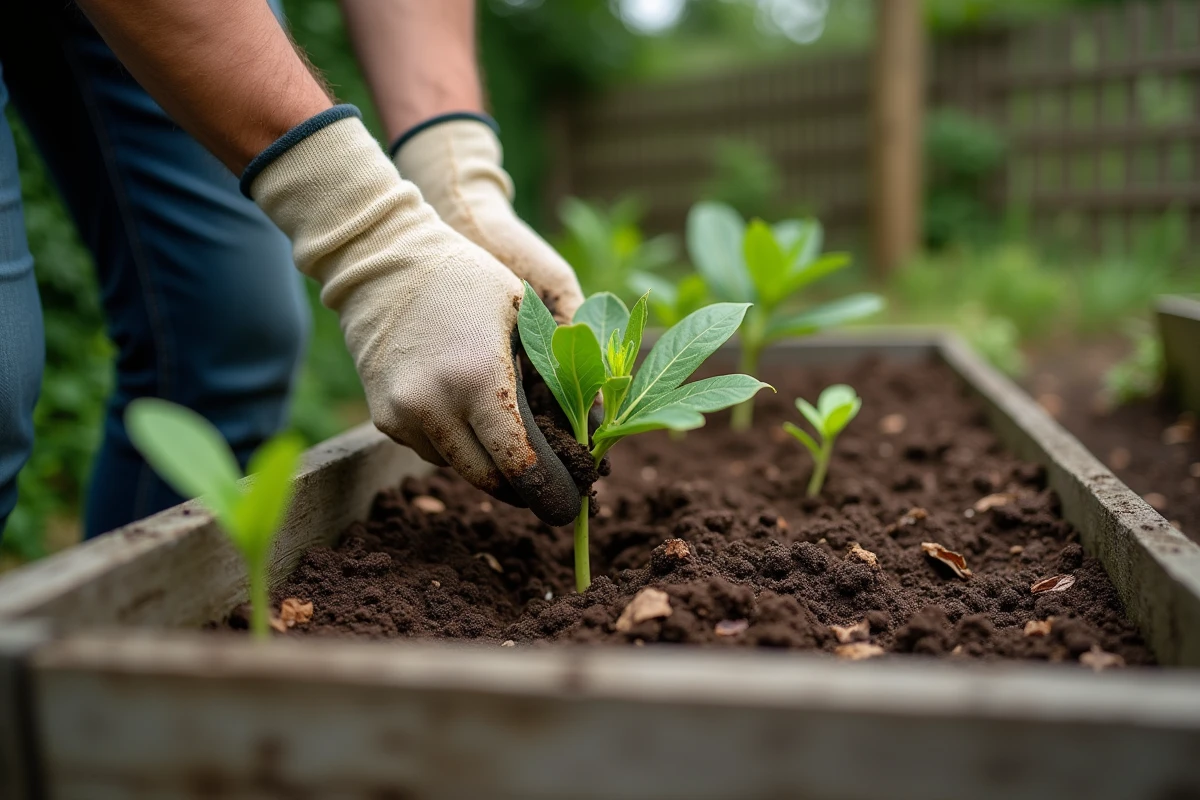
Have you ever noticed that some flower beds remain moist even after several days without rain? This is often the effect of a properly applied mulch at the base of the plants. By covering the soil with dead leaves, chipped branches, or dried grass clippings, evaporation is limited, and the soil is gradually nourished.
Among the services of L’Herbe sous le Pied, this approach to living soil occupies a central place: maintenance does not start with trimming shrubs, but with observing what is happening under our feet.
What materials to use for mulching
- Grass clippings, spread in a thin layer and left to dry, provide a nitrogen-rich mulch that decomposes quickly and is suitable for annual flower beds.
- Chipped branches (BRF) provide carbon and decompose slowly, making them a durable ally for shrub bases and hedges.
- Dead leaves, free in the fall, protect the soil from frost and create a habitat for many beneficial insects.
The French Office for Biodiversity reminds us that gardens and green spaces are key areas for local biodiversity. Every act of mulching or composting directly contributes to this goal.
Reasoned mowing and differentiated lawn management
Mowing less often does not mean leaving everything to grow wild. Reasoned mowing involves adjusting the height and frequency of cuts according to different areas of the garden. Near the terrace, a short lawn can be maintained for comfort. Further away, a strip left tall for several weeks allows grasses to flower and pollinating insects to find resources.
A garden managed with differentiated mowing requires fewer mower passes, which reduces fuel or electricity consumption and maintenance time. The grass also develops deeper roots when mowed less short, making it more resistant to heat episodes.
Valuing green waste rather than throwing it away
Mowing and pruning produce a volume of plant waste that many gardeners take to the dump. Transforming these materials on-site, into compost or mulch, avoids trips and enriches the soil for free.
Mature compost is a great substitute for commercial fertilizers. A well-managed compost pile (alternating green and brown materials, regular moisture) produces an amendment usable in just a few months. This closed cycle is at the heart of the natural garden logic.

Choosing plants and shrubs suited to the soil
Planting a rhododendron in calcareous soil or an olive tree in waterlogged clay soil is setting up for failure. The natural garden is based on a simple principle: choosing plants suited to the local soil and climate.
Native or long-acclimated plants require less watering, are more resistant to diseases, and provide food for local insects. A bed composed of sages, yarrow, and ornamental grasses, for example, can survive the summer with minimal watering once well-rooted.
Free-form shrubs and hedges rather than single-species hedges
Hedges of thuja or cherry laurels, trimmed into walls, offer almost nothing to local wildlife. A countryside hedge mixing several species of shrubs (dogwood, hazel, viburnum, privet) produces berries, flowers staggered over several months, and shelters for birds.
This type of hedge requires less frequent trimming than a strict hedge. We intervene once or twice a year, respecting nesting periods, rather than using the hedge trimmer every month.
Resilience against heatwaves: preparing the garden for difficult summers
Prolonged heat episodes put traditional gardens to the test. Yellowed lawns, scorched plants, soil as hard as stone: the scene is familiar. A garden designed according to natural principles withstands these heat waves better.
Mulching, living soils, and suitable plants form a trio of resilience. Mulching retains moisture. Soil rich in organic matter retains water like a sponge. Plants chosen for their drought tolerance do not require daily watering.
- Mulching all bare surfaces before the onset of high heat significantly reduces plant water stress.
- Grouping plants by water needs (dry zones, cool zones) avoids wasting water on plants that do not need it.
- Keeping trees or large shrubs for shade protects the most fragile beds during the hottest hours.
A natural and healthy garden is not built in a weekend. It is a gradual transition, season after season, where each action (a mulch laid here, a tall mowing area there, a local shrub planted in the fall) strengthens the whole. The soil improves, biodiversity settles in, and maintenance decreases as the garden gains autonomy.