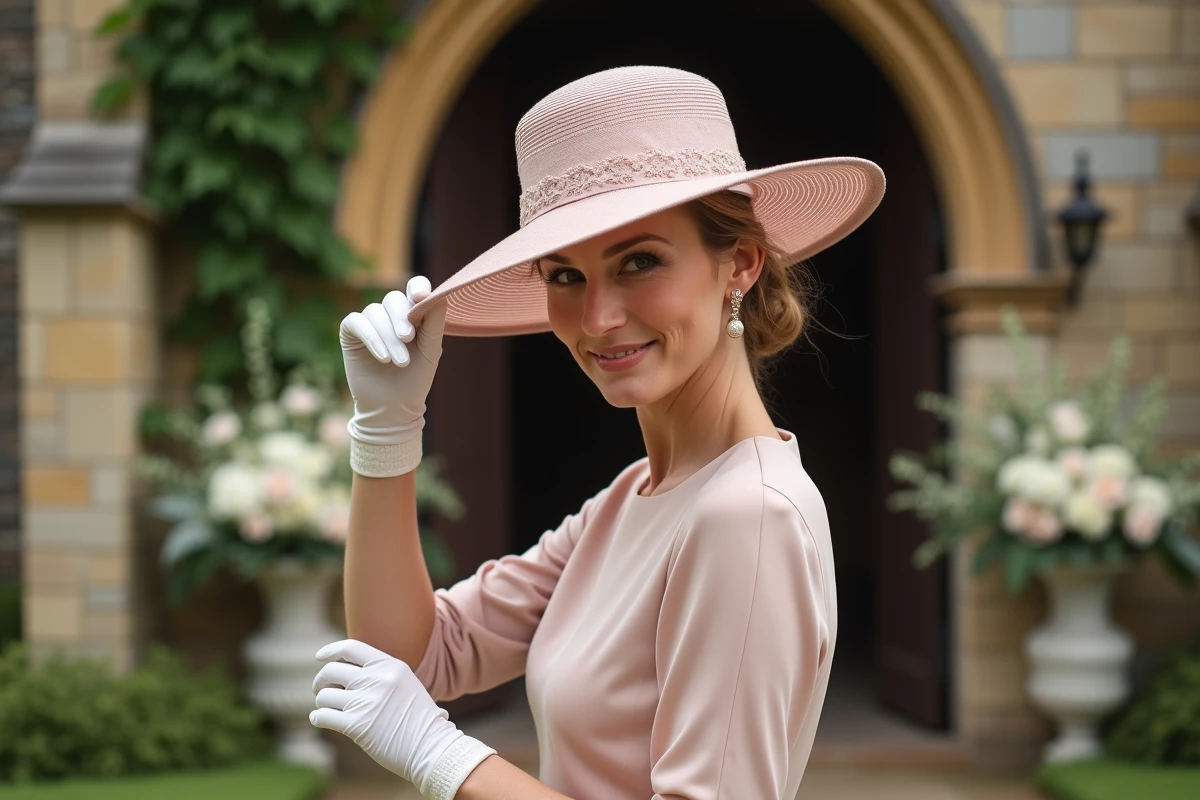
The wedding hat for a guest adheres to a specific dress code: it complements the outfit without competing with the bride’s attire, remains proportionate to the silhouette, and adapts to the degree of formality of the ceremony. Before choosing a model, one must understand how the shape, size, and color of the headpiece interact with the rest of the outfit, the jewelry, and the venue.
Balance between hat and jewelry: the rule of the single statement piece
Recent recommendations from milliners and jewelry brands converge on a simple principle: only one statement accessory per outfit. A wide-brimmed hat or a structured fascinator already captures attention. Adding large earrings or a statement necklace creates a feeling of overload, particularly noticeable in high-definition photos and videos.
In practical terms, a voluminous hat pairs well with delicate jewelry, a discreet chain, stud earrings, or a simple bracelet. Conversely, a guest who prefers statement earrings or an elaborate necklace would do better to opt for a headband or a small veil rather than a structured hat. The question to resolve before purchasing is therefore not “which hat to choose” but “will the hat or the jewelry carry the outfit”.
Knowing how to wear a women’s hat as a wedding guest also involves coordinating materials: a sisal or woven straw fascinator calls for matte or gold metals, while a more formal felt hat tolerates the shine of silver or discreet rhinestones better.
Hat size and practical constraints of the wedding day
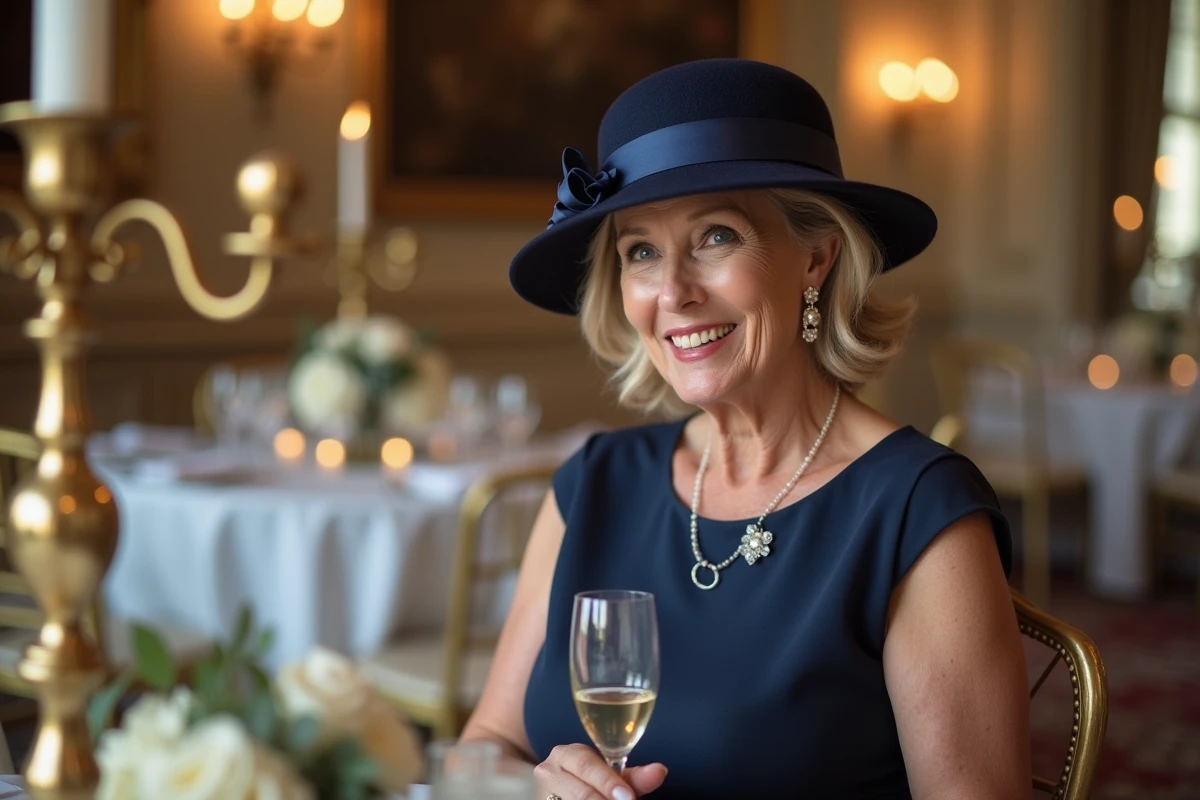
A wedding often lasts from the ceremony to dessert, spanning several hours in a row. The hat must remain comfortable throughout this duration. A model that is too heavy or too large is usually removed before the cocktail hour, making the investment pointless and leaving a flattened hairstyle.
Proportions to respect according to the venue
In indoor ceremonies (church, town hall, reception hall), large brims pose a concrete problem: they block the view of people sitting behind. This point frequently arises in guests’ feedback. For an indoor ceremony, a fascinator, a small hat with a short brim, or a structured headband avoids this inconvenience.
Outdoors, the large hat regains its relevance. It protects from the sun and provides an elegant silhouette in group photos. However, one must anticipate the wind: a model without a fastening system (integrated comb, discreet elastic under the hair) risks blowing away during the cocktail.
- Indoor ceremony: fascinator, short veil, or headband, brim width less than shoulder width
- Outdoor reception: wide-brimmed hat, medium-brim hat, secured with a comb or hat pin
- Mixed day (church then garden): favor an intermediate format, such as a small asymmetrical brim, suitable for both contexts
Integrating the hat into the hairstyle trial
Hairdressers specializing in weddings now incorporate the hat into the trial appointment, including for close guests (mother of the bride, maid of honor). The hairstyle must be designed with the headpiece, not independently. A low bun works under most fascinators, but a cloche hat requires loose hair or specific lateral volume.
Colors and faux pas to avoid for a guest in a hat
The choice of hat color follows the same restrictions as that of the dress. White and its variations (ivory, cream, light champagne) remain reserved for the bride. A white hat worn by a guest, even with a dark dress, sends an ambiguous signal in group photos.
Black is divisive. In some regions and families, a black hat is perfectly acceptable, especially when paired with a colorful outfit. In other contexts, it evokes mourning. The safest solution: pick a color already present in the dress or shoes. A hat in a complementary tone (navy with a pastel dress, terracotta with a green outfit) creates visual coherence without risk.
The trap of the matching “total look” hat
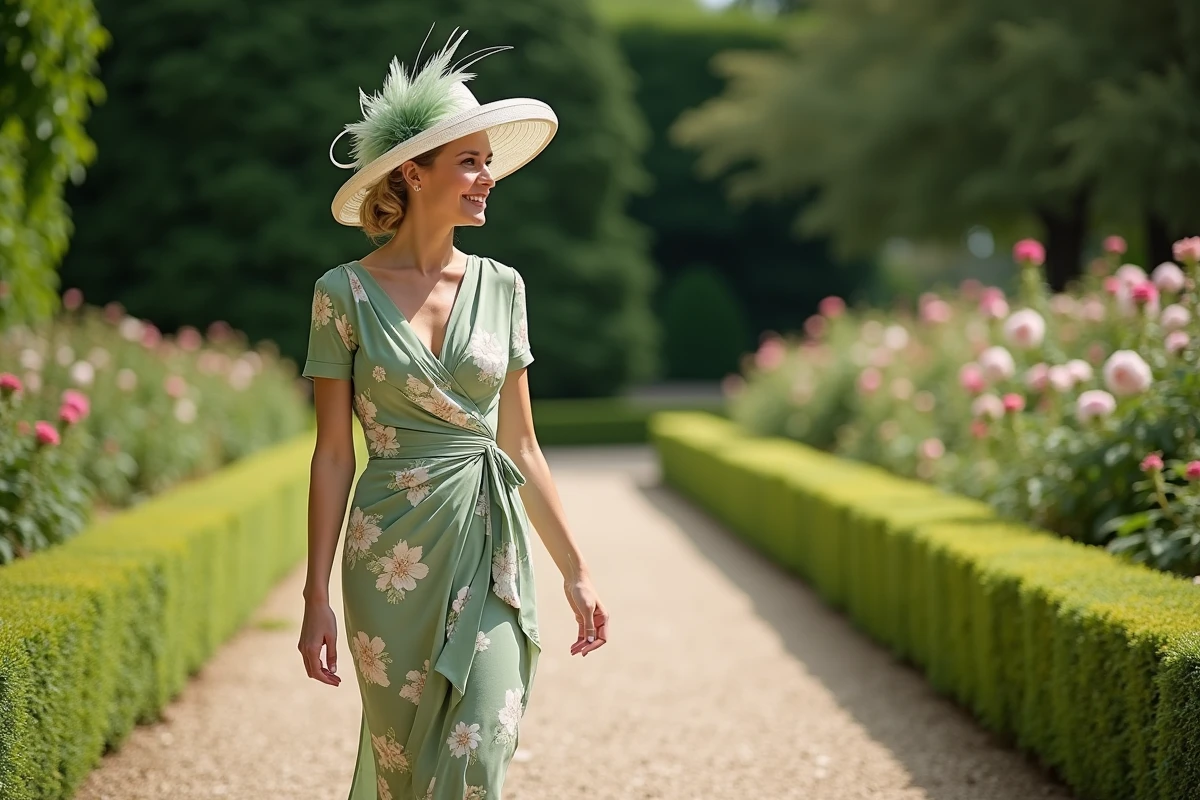
Perfectly matching the hat to the dress, shoes, and bag in the same shade rarely produces the desired effect. The result often appears stiff and dated. A slight variation in tone or material between the hat and the rest of the outfit adds depth. A natural straw hat with a solid dress, or a textured fabric fascinator with a fluid outfit, is enough to create contrast without breaking harmony.
Bibi, fascinator, or classic hat: which format to choose according to the outfit
The distinction between these three formats is not just a matter of size. The bibi attaches directly to the hair, is often asymmetrical, and pairs well with fitted dresses or suits. The fascinator, more airy, rests on a headband or clip: it suits lightweight outfits like fluid dresses or jumpsuits.
The classic hat (wide-brimmed, cloche, women’s trilby) requires a more structured outfit to avoid unbalancing the silhouette. Wearing a wide-brimmed hat with a long, flowy dress creates a mismatch, while it works well with a straight dress or a fitted pantsuit.
- Fitted dress or suit: structured bibi or small hat with a short brim
- Fluid dress or lightweight jumpsuit: fascinator on a headband, embellished headband
- Pantsuit or straight dress: wide-brimmed hat, cloche, medium-brim hat
- Very simple outfit (solid dress without details): the hat can be the statement piece, in a more assertive format
Designers and milliners now systematically offer a headband or bibi version for every hat model, making it easy to switch from one format to another without changing style. Testing both options with the complete outfit, including shoes, remains the most reliable way to decide before the wedding day.