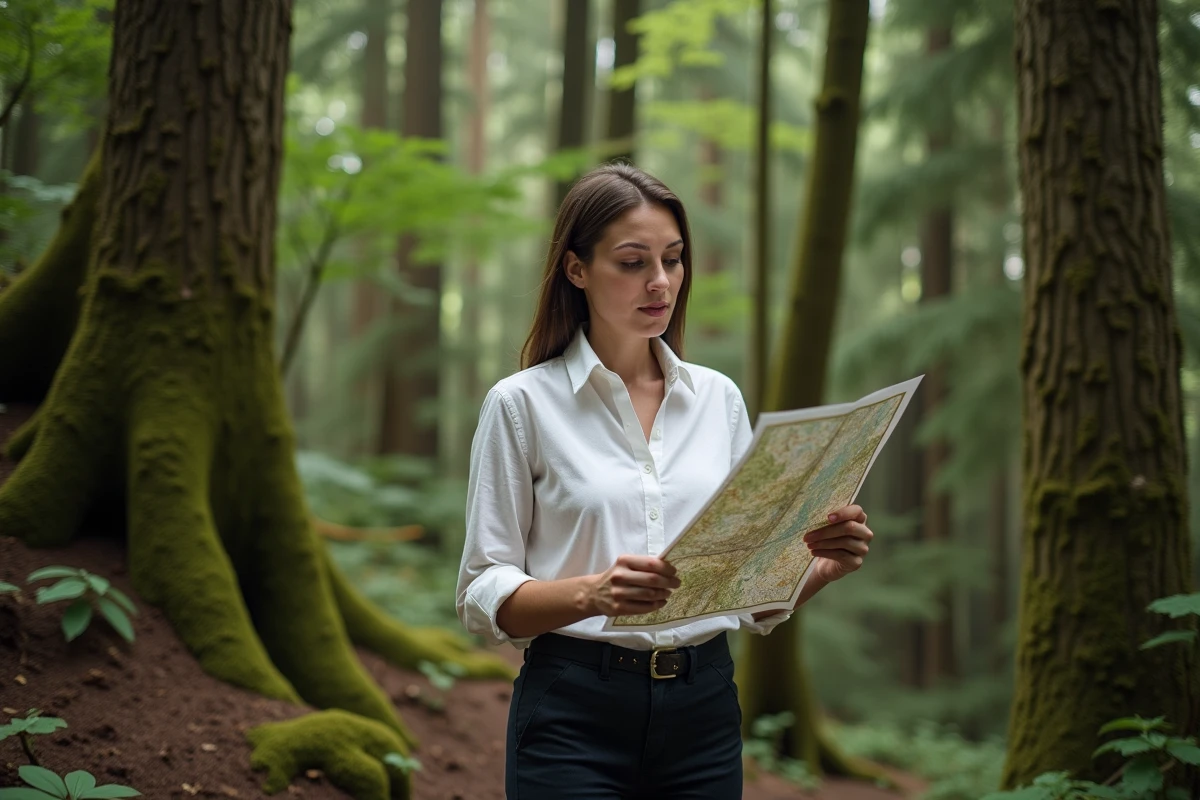
On an ecological restoration site, land is not classified by academic reflex. We observe the rock, vegetation, and water regime, then decide what to plant, what to protect, and what to leave alone. Classification comes after the site diagnosis, not before. Understanding the types of environments and their characteristics is primarily about giving ourselves the right references to act in environments that do not resemble each other.
Aquatic and terrestrial environments: the constraints imposed by the terrain
When intervening in an aquatic environment (lake, river, coastal wetland), the first constraint is not biological; it is physical. The density of water, its temperature, and its dissolved oxygen levels condition everything else. A restored ecological corridor in the Amazonian wetland does not function at all like a replanting in dry savanna.
To delve deeper into the types of environment and their characteristics, it is beneficial to start from concrete cases rather than abstract definitions. Clay soil in a temperate climate retains water and favors certain plant species. Sandy substrate in an arid environment imposes completely different root strategies.
The terrestrial environment is first understood through its soil and relief. Altitude, exposure, and geological composition determine which living communities can settle. In mountainous areas, altitudinal zonation creates distinct vegetation layers over a few hundred vertical meters, each with its own resources and constraints.
- In aquatic environments, light penetrates differently depending on turbidity, which structures the food chain from algae to higher predators.
- In terrestrial environments, water availability remains the main limiting factor in the majority of biomes, well before temperature.
- Transition zones (estuaries, mangroves, peatlands) combine constraints from both environments and often host a denser biodiversity than strictly terrestrial or aquatic environments.
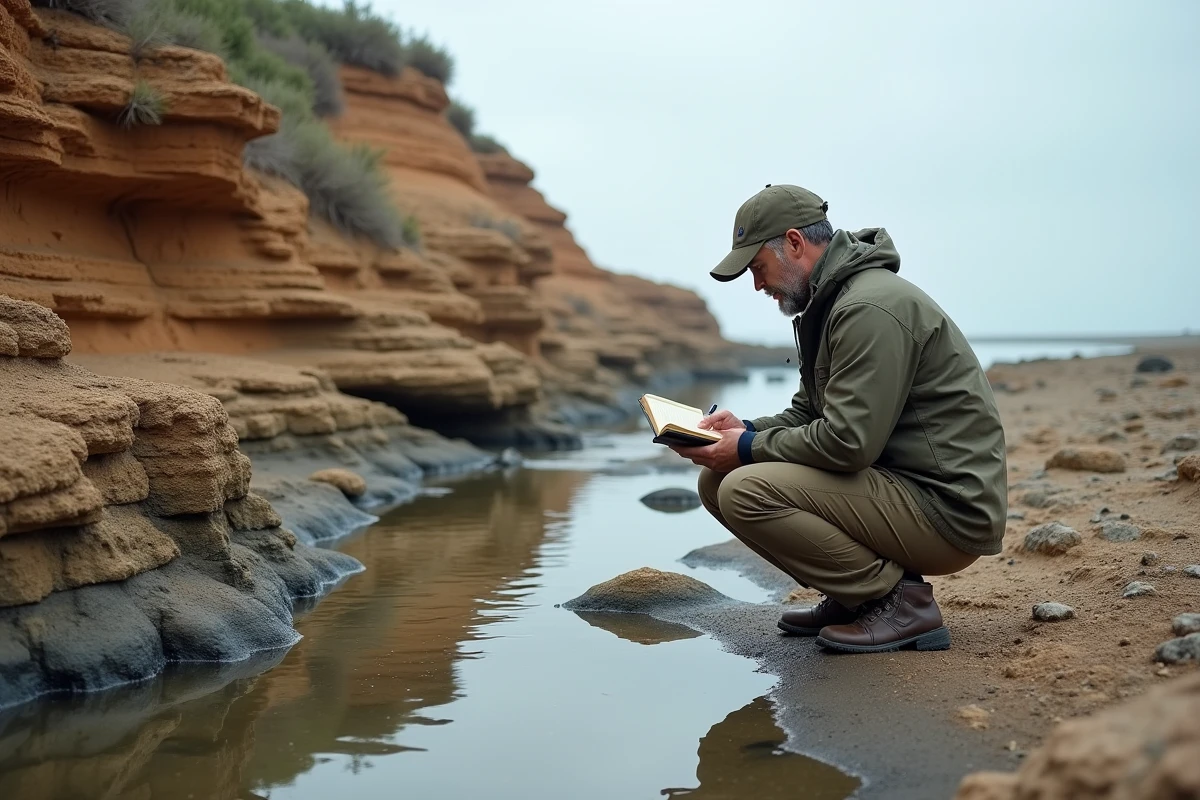
Urban and anthropized environments: pollution, resources, and species adaptation
There is a tendency to oppose natural environments and urban environments as two separate worlds. On the ground, the boundary does not exist. An industrial wasteland on the outskirts of a city sometimes hosts more pioneering species than a forest managed in monoculture.
Urban pollution acts on several simultaneous fronts: chemical contamination of soils, air pollution, noise nuisances, and artificialization of surfaces. These impacts accumulate and alter the characteristics of the environment at a speed that natural ecosystems have never experienced.
Experiences in ecological restoration show that some hybrid environments (natural and anthropized) develop unexpected resilience. Restored ecological corridors in the Amazon have allowed for better resistance to extreme droughts in recent years, according to a report from IPBES on hybrid ecosystems in Latin America.
This observation encourages a reconsideration of environmental protection not as a form of isolation, but as active management of the interactions between human societies and living environments.
Digital environment: a classification that traditional frameworks ignore
When discussing types of environments, data centers are rarely considered. The physical footprint of digital technology is massive: water consumption for cooling, land occupation, and increasing energy demand. A report from the OECD on digital environments and sustainability now identifies the digital environment as a fifth major type to be integrated into classifications.
This is not just a matter of vocabulary. The environmental impacts of digital technology are measured in extracted raw materials, pollution generated by component manufacturing, and energy consumed during operation. Returns vary on this point depending on the calculation methods used, but the trend is clear.
Quantum environments: pushing physical limits
Emerging quantum environments pose an even more radical classification problem. A quantum computer operates at temperatures close to absolute zero, in conditions of vacuum and vibrational isolation that do not exist anywhere in the terrestrial nature.
Current classifications do not integrate these extreme artificial ecosystems. We are creating physical environments without natural equivalents, with properties (superposition, entanglement) that redefine what we mean by “environmental conditions.” These environments do not only impact the planet: they create spaces with operational physical laws different from those covered by our analytical frameworks.

Cross-cutting characteristics of environments: the criteria that matter on the ground
Regardless of the type of environment, there are common characteristics that structure site analysis.
- The capacity for resilience: an environment that regenerates after a disturbance (fire, flood, temporary pollution) remains functional. This capacity varies greatly from one environment to another.
- The connectivity with neighboring environments: an isolated ecosystem (island, closed lake, enclosed plot) evolves differently from an environment connected to corridors for species and water flows.
- The level of anthropogenic pressure: resource extraction, urban development, diffuse pollution. This is often the primary factor of degradation, well before natural climatic variations.
- The diversity of living species present, which serves as a direct indicator of the health of the environment.
These criteria allow for the comparison of very different environments on an operational basis. A coral reef and a boreal forest can be evaluated using the same framework, provided that identical thresholds are not imposed on distinct realities.
The current trend in environmental sciences pushes to go beyond the four classic categories. Between the digital, the spatial environments studied by NASA for their bio-containment protocols, and quantum environments, the boundaries between types of environments are becoming porous. What remains constant is the need for a local diagnosis before any action, and the awareness that each environment responds to its own rules that cannot be ignored.