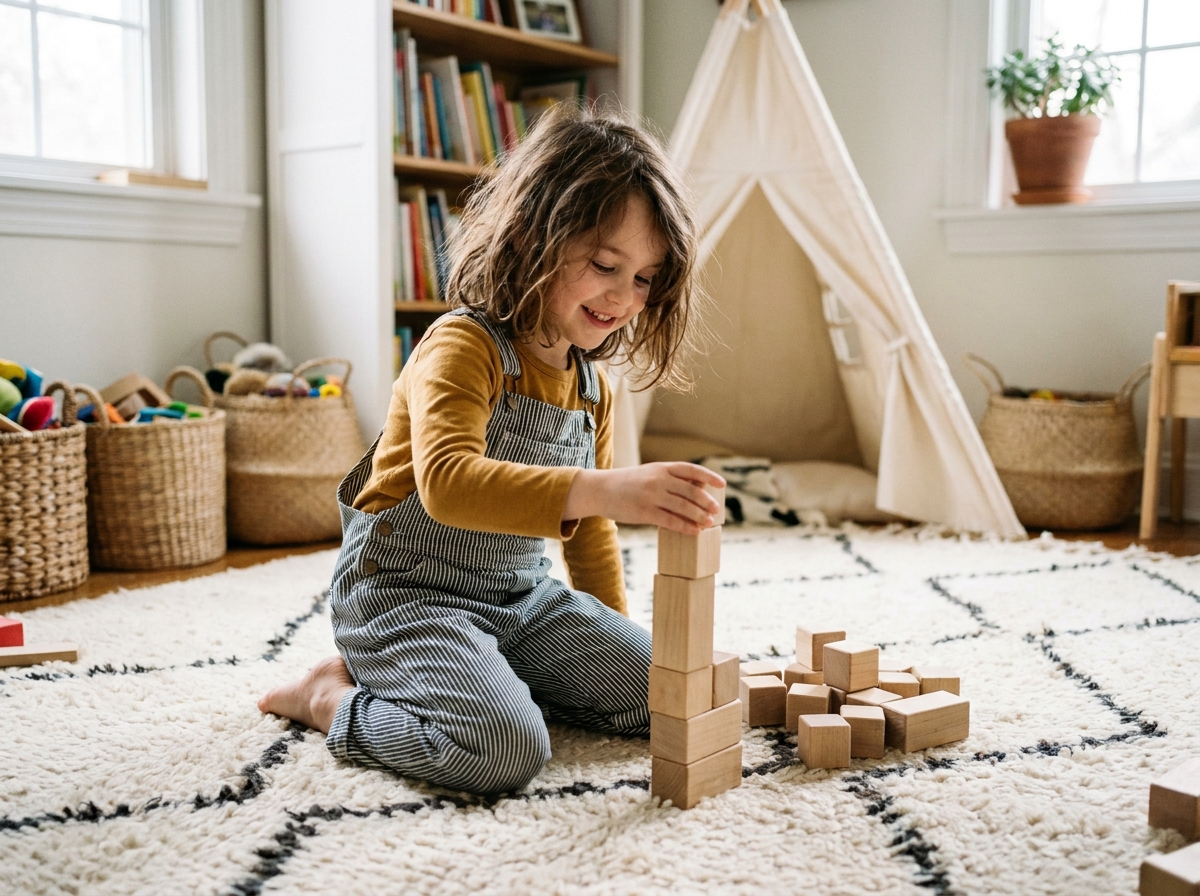
A poorly designed play area encourages distraction and increases the risk of domestic accidents. European standards impose strict requirements, but few households apply all the recommendations. The absence of defined zones hinders autonomy, while inappropriate furniture can slow down motor development.
Organizational solutions exist, even for small spaces. The combination of functional storage and the choice of toys suitable for each stage of growth then becomes a determining factor. Early childhood professionals prioritize modularity and accessibility, without neglecting the impact of the environment on creativity.
What you need to know for a safe and suitable play area at home
In every home, the question of the dedicated play space arises. Living room, bedroom, attic, basement, all configurations are possible, provided that three major axes are guaranteed: safety, autonomy, and organization. The choice of location is never trivial. A visible and accessible space promotes effective supervision without preventing the child from exploring. Natural light, supported by soft lighting, enhances well-being and concentration. Choosing non-toxic materials significantly reduces health risks.
Designing a playroom requires careful selection of furniture. It is better to choose furniture suited to the child’s size, free of dangerous edges. For storage, favor open bins or lightweight chests, allowing the child to get into the habit of choosing their own toys and putting them back in place. This principle of autonomy structures the relationship to space and promotes motor development. Organizing the room into several well-defined zones (reading corner, pretend play area, construction zone, relaxation corner) helps the child to take ownership of the space and channel their overflowing energy.
The environment should remain stimulating, never oppressive. A colorful rug, a handful of cushions, shelves within reach, a playhouse or a tipi are enough to create a play universe where imagination can soar. Safety is non-negotiable: prohibit any sharp or fragile objects, and opt for paints and textiles free from harmful substances. Each setup should be adapted according to age, growth rate, and desires: a baby’s playroom never resembles that of a middle schooler. To go further on integrating the play area into the bedroom, the resource my child’s room details what to consider for a harmonious and secure environment.
How to organize and optimize the space, even in a small room?
A few square meters are enough to transform a playroom into a space for autonomy and creativity. The idea is to structure the space, offering multiple zones without overcrowding the room. A soft rug here to mark the play area, a table suitable for the child’s height for drawing there, wall shelves to display books and construction toys: each element finds its place without obstructing movement.
Order is established with modularity. Child-height storage furniture serves both as a divider and an access point to toys. Stackable bins or chests under a bench free up the floor. Wall shelves remain discreet while showcasing books and small items. Invest in solutions that evolve over time: the reading corner can become a construction workshop, depending on age and interests.
Here’s how to structure the play area so that it remains fluid and pleasant:
- Visually delineate: rugs, colors, or low furniture structure the space without enclosing the child.
- Group by use: a reading area, a drawing area, a pretend play area.
- Encourage autonomy: free access and child-height storage facilitate daily life.
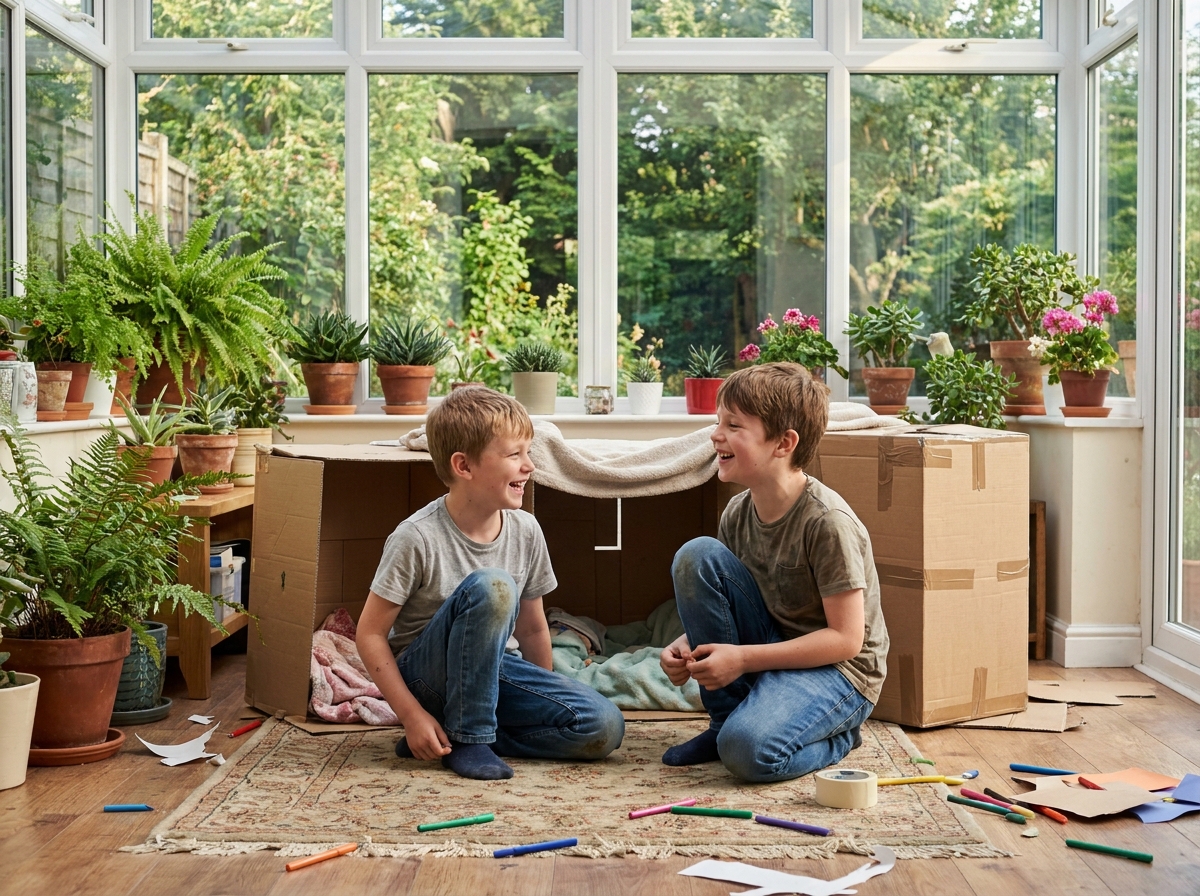
Optimizing a playroom corner means inventing and then evolving its uses. Tent, tipi, temporary playhouse: each new configuration nurtures creativity and transforms the room. Dedicated spaces constantly adapt, responding to growth and needs, so that each child can claim their territory, even in a modest-sized home.
Ideas for games and storage for a stimulating environment at every age
To support the child’s development, it is essential to adapt the games to their interests and age. In the first months, focus on sensory games: sensory mats, rattles, unbreakable mirrors. Motor skills are developed on the floor, on a soft, easy-to-clean, and safe mat. Later on, introduce pretend play games (mini kitchen, workbench), construction games, and books within reach thanks to low shelves.
The layout stimulates imagination while facilitating order. Consider storage furniture that evolves: rolling bins, compartmentalized chests, modular shelves. Each family of toys has its place, inviting the child to participate in tidying up. Thematic spaces, drawing table, reading corner, role-play area, are organized around vibrant decor: dynamic colors to awaken, soft tones to soothe, stickers or chalkboard walls for personalization.
At every age, involve the child in choosing activities and decor. Jungle theme, marine universe, tales and legends: symbolic play takes its place and invites exploration. Board games and puzzles remain within reach, stored in easy-to-access baskets for family moments. The space transforms with each discovery and desire: the playroom is never static; it renews itself as much as the child’s imagination.
At the end of the day, when the toys return to their place and the room calms down, the play area reveals its full potential: that of a refuge, a playground, a laboratory of everyday life. Each age has its decor, each personality its dream corner. The real challenge is to give the child the freedom to invent the world, just within reach.