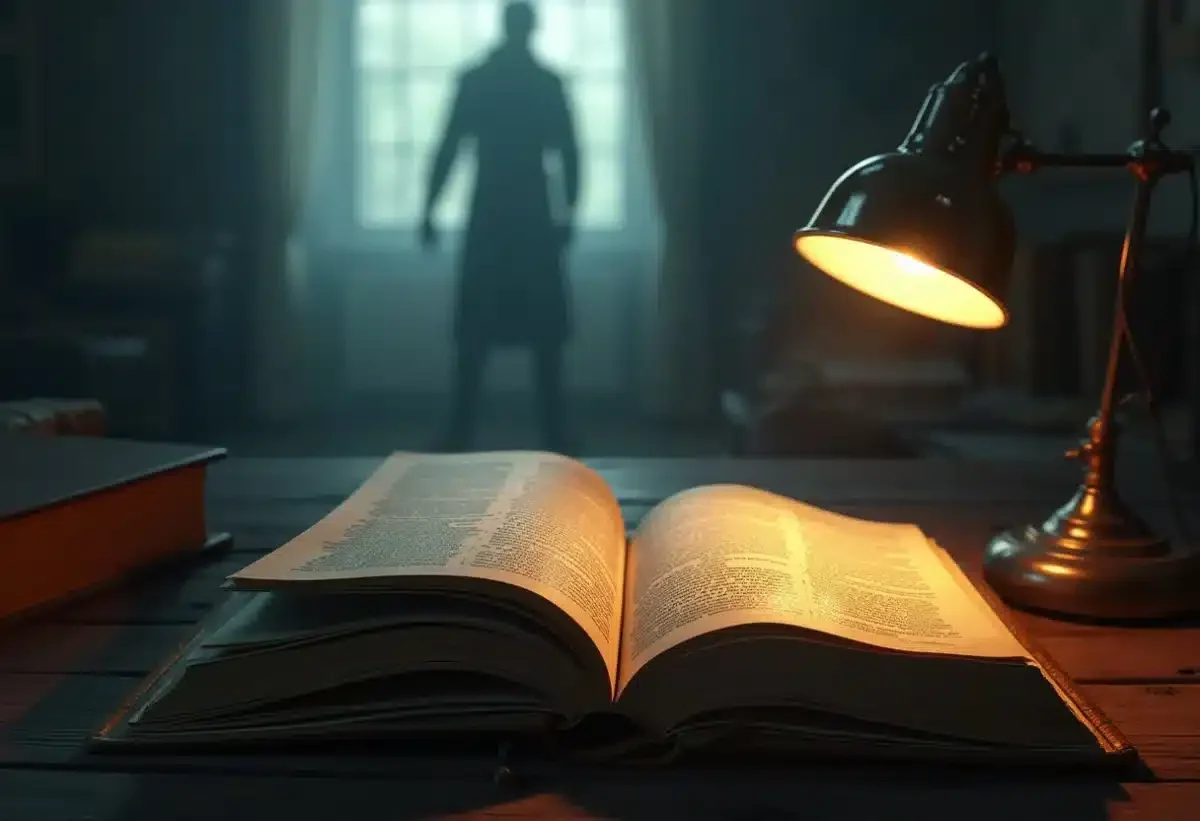
Anonymous authors fascinate readers, their mystery igniting curiosity and imagination. On online literature platforms, these faceless writers create captivating works that spark debates and speculations among internet users. Behind each pseudonym lies a unique voice, often freed from social constraints and the expectations of the literary market.
Anonymity allows these creators to focus on the essence of their writing, without being influenced by their real identity. By exploring the motivations and impacts of this choice, we discover a world where words take precedence over names and where literary intrigue is accompanied by a genuine human enigma.
The reasons behind the anonymity of online authors
Roland Barthes proclaimed “the death of the author” in 1967, paving the way for a new approach to literature where the author’s identity fades before the text. This philosophy resonates in the choice of many writers to remain anonymous. Anonymity offers creative freedom, allowing authors to express themselves without fear of personal judgment or retaliation.
In the past, François Ier imposed the legal deposit of works in 1537, a measure aimed at protecting authors’ rights but also at controlling the ideas disseminated. Today, anonymity on online platforms allows for circumventing these historical constraints, offering a playground where writing is liberated from social shackles.
Some famous cases illustrate this trend:
- Dominique Aury, under the pseudonym Pauline Réage, wrote “Histoire d’O,” a novel that would likely have been censored if its author had been known.
- Romain Gary, for his part, used the pseudonym Émile Ajar, winning two Goncourt prizes under two different identities.
- Elena Ferrante, the pseudonym of Anita Raja, was unmasked by Claudio Gatti, but her anonymity had already allowed the focus to be exclusively on her work.
Anonymity also protects against potential accusations of plagiarism, such as those aimed at Jacques Attali and Calixthe Beyala. On this detached page of identity, writing finds a rare purity, a voice without personal echo. Jean-Paul Carminati, a publisher, explains that anonymity can also be an editorial strategy to generate interest and mystery, an effective marketing lever in a saturated market.
Anonymous authors shape a literary landscape where the text takes precedence over identity, where every word matters more than the name that signs it.
Impact of anonymity on the reception and interpretation of works
Anonymity disrupts the reception of literary works, profoundly altering the relationship between the text and its reader. Without an author’s identity, reading becomes a purely textual experience, stripped of prejudice. This anonymous approach reinforces the notion of “text” as defined by Roland Barthes: a fabric of citations from a thousand cultural sources.
Anonymous works, such as those of Dominique Aury under the pseudonym Pauline Réage or those of Elena Ferrante, intrigue readers and critics. They compel a focus on the text itself, leading to more varied interpretations that are less influenced by the author’s biography. Literary critics thus face an unprecedented challenge: to judge a work without being able to resort to analyzing the writer’s life.
- Critical neutrality: Anonymity encourages critics to evaluate the text more objectively.
- Multiple interpretations: The absence of biographical context opens the door to varied readings.
Jean-Paul Carminati, a publisher, notes that this strategy can generate media excitement, drawing attention to the intrinsic qualities of the text. The mystery surrounding an author’s identity creates an environment conducive to the emergence of literary myths, where each work becomes a puzzle to decipher.
The example of the “Bourbon Kid” shows how well-maintained anonymity can generate a community of devoted fans, fascinated by the mystery. Readers become investigators, engaged in a perpetual quest for the hidden identity, thus enriching the literary experience with a playful and participatory dimension.