
In a world where security threats are becoming increasingly sophisticated and unpredictable, optimizing the protection of individuals and infrastructures has become a major concern. Intelligent centralization of security systems is emerging as a strategic solution. This approach involves integrating and coordinating various devices — alarms, video surveillance, access control, intrusion detection — into a unified platform. This process not only allows for a quicker response in the event of an incident but also enhances prevention through data analysis and the recognition of potentially dangerous patterns.
Intelligent Centralization of Security Systems: Challenges and Benefits
In a context where the risks of burglary and house fires loom over our homes, intelligent centralization of security systems represents a significant asset for the safety of modern households. Take the example of Somfy, a recognized player in the sector, which offers custom security kits and alarm solutions. These connected systems, integrating cameras, smoke detectors, motion sensors, and intrusion sensors like the IntelliTAG™, provide intelligent home management. They help prevent burglaries and fires, thus contributing to an invaluable peace of mind for users.
The smart home, equipped with these intelligent security systems, promises not only comfort but also enhanced security. The IntelliTAG™ sensors, for example, are designed to prevent any intrusion attempt before it even occurs. Through platforms like ‘MonEspaceSecuritas’, remote monitoring becomes possible, allowing homeowners to keep an eye on their property in real-time, wherever they are. This immediate reaction capability in the face of abnormal situations is a decisive advantage of the intelligent centralization of security systems.
The advantage of remote management is not limited to monitoring; it also offers the ability to control other aspects of the smart home remotely. Somfy’s connected systems, for instance, allow interaction with alarms, roller shutters, locks, and even light bulbs, creating a fully customizable and scalable comfort and security ecosystem. The relationships between these different entities enhance the overall security of the home, making intelligent centralization a top-tier integrated home security strategy.
How to Implement an Effective Centralization of Your Security Systems?
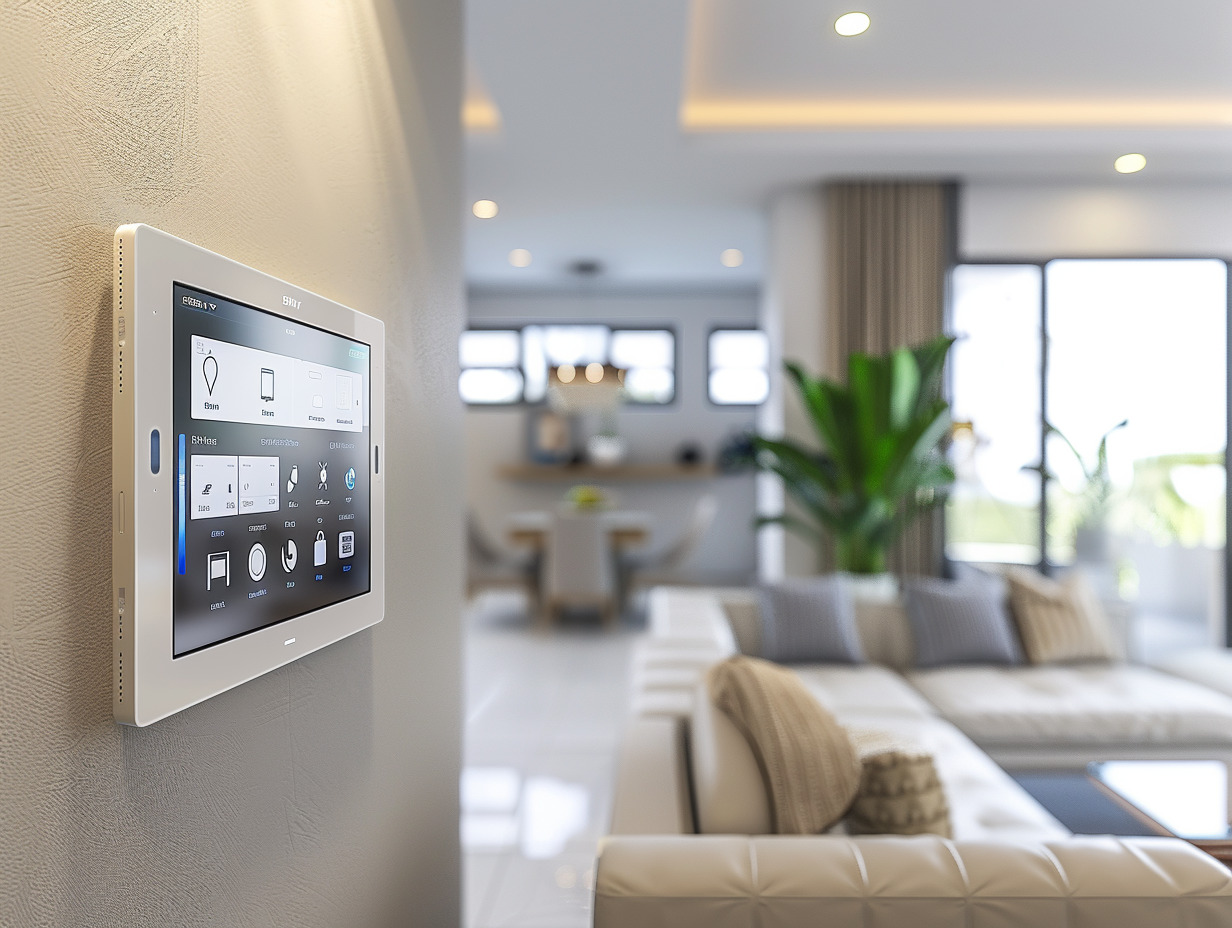
To begin implementing an effective centralization of security systems, consider choosing a high-performance smart home hub such as the TaHoma® Switch from Somfy. This device serves as the heart of the smart home, connecting and orchestrating all devices: from the smart alarm to connected roller shutters, as well as the connected lock and light bulbs. The coherence and interoperability of these elements are crucial to ensuring flawless home security.
The practicality of remote management is ensured by intuitive user interfaces, accessible via smartphone. Through dedicated applications, the owner can control their smart alarm system, activate or deactivate their connected locks, adjust lighting, and even simulate a presence by manipulating the shutters, all remotely. This flexibility of interaction enhances responsiveness to potential intrusions or domestic incidents.
Beyond smartphone control, accessories such as the hands-free detection badge and the indoor code keypad enrich the user experience. These devices offer alternative methods for controlling the smart alarm, allowing for customization based on individual habits and preferences. The Home Keeper Pro service, for its part, offers professional monitoring, thus complementing the security arsenal provided by Somfy for a decidedly modern and effective protection.