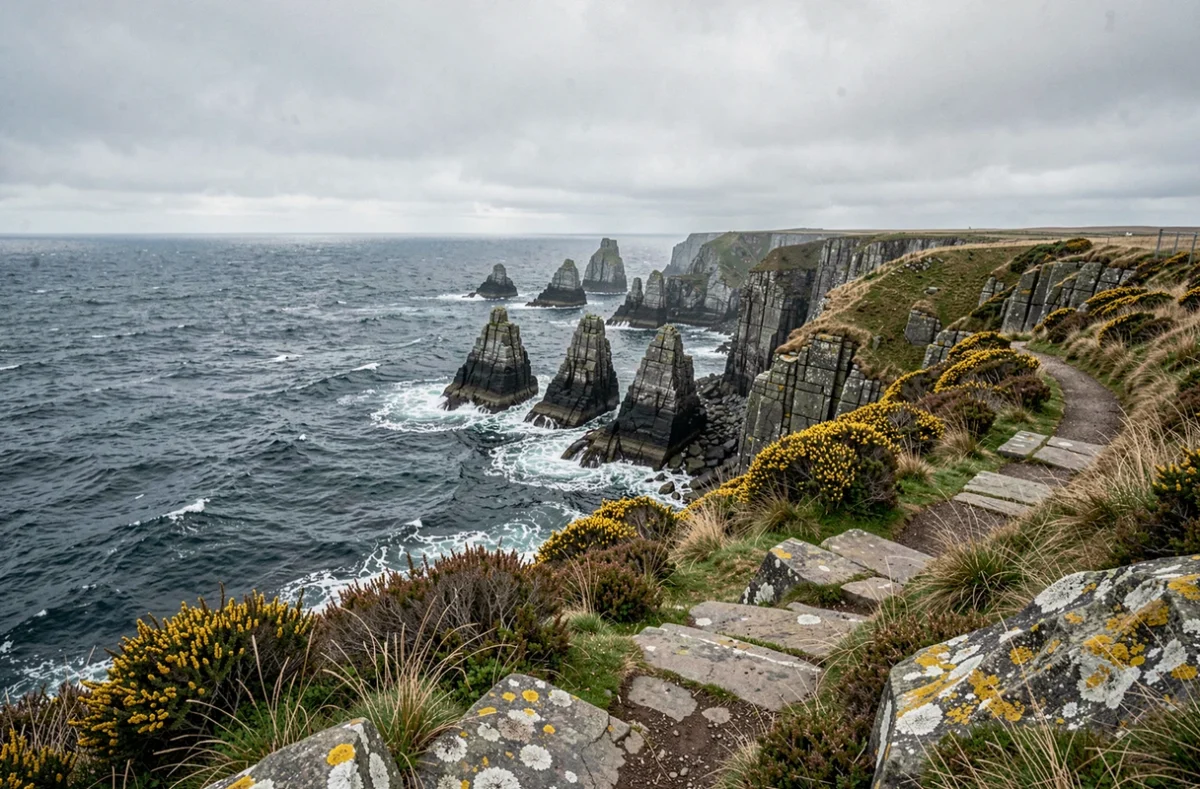
Brittany captivates visitors with its rugged coastline, windswept moors and granite villages. But several of its most photographed sites are also protected areas where access varies depending on the season, the weather or visitor numbers. Planning a trip to Brittany also means checking what is open, what is regulated and what requires special attention before you set off.
Brittany’s coastal trails: temporary closures and diversions
Already planning to hike the GR34? This trail follows almost the entire Brittany coastline and is one of France’s most beautiful routes. What guidebooks rarely mention is that some sections of the GR34 may be closed by official order for safety reasons.
Unstable cliffs, burrows undermining sea walls, landslides after heavy rain: the causes vary, and closures can happen at any time of year.
Before each hike, check local notices (from town halls and tourist offices) and follow the signposted alternative routes. This precaution lets you enjoy the coastal scenery safely, whether on the cliffs of Cap Fréhel or the trails of the Crozon Peninsula. To explore the range of destinations and check practical information for each area, a useful resource is https://www.bretagne-region.com.
Île de Bréhat and the Sept-Îles: regulated access and conservation rules
Bréhat is often described as a flower-filled paradise that visitors can explore freely. The reality is more nuanced. Access to Bréhat is regulated during busy periods. Daily visitor numbers may be limited, which means that in the height of summer, leaving for the ferry terminal too late could result in being denied boarding.
Booking your crossing in advance and choosing May–June or September can transform the experience. The island is explored on foot or by bike, with no cars. Its hydrangea-lined lanes and pink granite coves are well worth a visit, provided you plan ahead.
Sept-Îles: a nature reserve with restricted areas
The Sept-Îles archipelago, off the coast of Perros-Guirec, is home to France’s largest colony of northern gannets. Visits are governed by the nature reserve’s strict rules.
- Landing is limited to Île aux Moines, the only island open to the public, where a warden welcomes visitors.
- Boating is prohibited in a protected zone around Île Rouzic during the nesting season, which covers much of spring and summer.
- Boat trips let you observe grey seals and seabirds from offshore, without landing on the other islets.
These restrictions don’t make the visit any less worthwhile. They make it more respectful and, paradoxically, more memorable: watching thousands of birds from a quiet boat creates a sense of immersion that mass landings could never offer.
Brittany’s beaches and green algae: something to check before you go
Brittany has hundreds of beaches, from the long stretches of fine sand in the Bay of Saint-Brieuc to the rocky coves of southern Finistère. Some rank among the finest on the Atlantic coast.
However, a less photogenic issue deserves your attention. Green algae can affect safety and access at some beaches, not just their appearance. As piles of green algae (ulva) decompose, they release hydrogen sulfide, a toxic gas at high concentrations.
Monitoring by relevant agencies indicates that dangerous threshold levels have not been exceeded at most monitored sites. However, beaches may be temporarily closed by prefectural order while algae are being cleared or if a risk is identified.
In practice, this mainly affects the bays of northern Brittany (Côtes-d’Armor). The best approach is to check beach conditions with the town hall or local tourist office before laying out your towel. Most beaches in Brittany are unaffected.
The Pink Granite Coast and Huelgoat Forest: scenery best enjoyed out of season
The Pink Granite Coast, between Perros-Guirec and Trébeurden, offers a geological spectacle unique in Europe. Erosion has sculpted the granite boulders into improbable shapes along the customs officers’ path. Visiting this coastline in the shoulder season means fewer crowds and spectacular light.
In October or April, the trails are accessible, accommodation is less booked up and the colors are more vivid. The same applies to Huelgoat Forest inland. This moss-covered granite landscape, crossed by a river, offers short hikes suitable for all levels.
Plan each leg of your trip instead of improvising everything
A successful trip to Brittany comes down to a few simple checks:
- Check the condition of coastal trails before each hike (closures and diversions).
- Book island crossings in advance, especially between June and September.
- Check beach conditions if green algae have been reported.
- Visit popular sites early in the morning (Pointe du Raz, Cap Fréhel, Dinan).
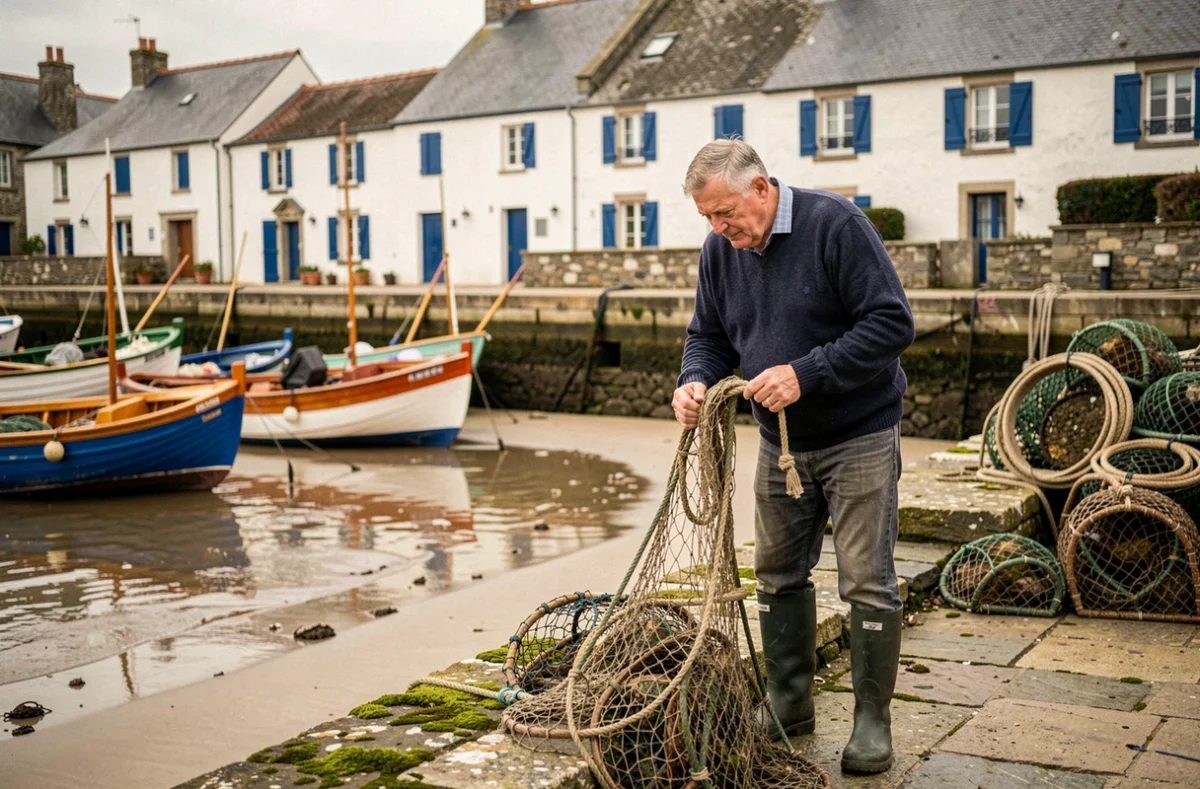
Brittany is more than a static postcard. Its granite landscapes, villages with narrow lanes and characterful harbors are best discovered with a little preparation. Planning ahead lets you enjoy protected sites in the best conditions, without any unpleasant surprises when you arrive.